The $3 Cookbook That Tore a Family Apart: Handling Possessions Worth More in Memory Than Money
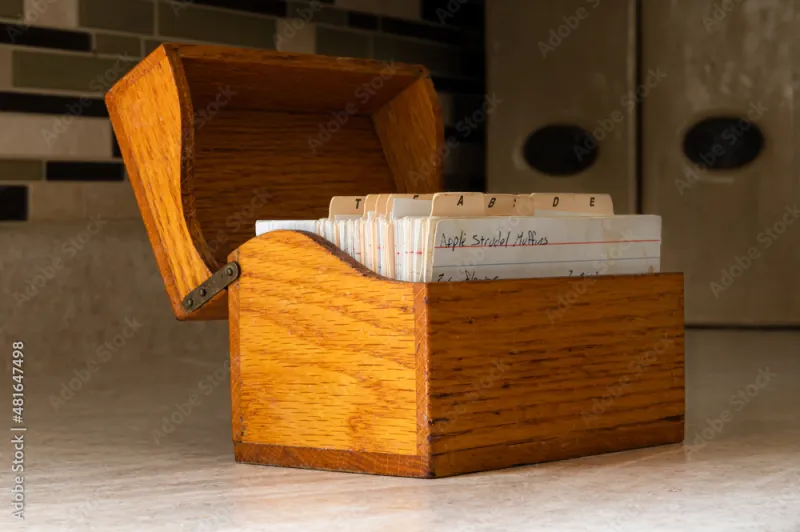
Photo: vintage handwritten recipe box on kitchen counter, via as1.ftcdn.net
The Fight No One Saw Coming
When their mother passed away in her Dayton, Ohio home, the three adult children of the Ellison family agreed on nearly everything. The house would be sold. The modest brokerage account would be split three ways. The 2008 Honda in the garage would go to the youngest, who needed a car.
Then someone opened the kitchen cabinet above the stove.
Inside was a tin recipe box, its lid soft from forty years of handling. Inside it: handwritten cards for sour cream coffee cake, Sunday pot roast, and the Christmas fudge the grandchildren remembered from every childhood December. Each of the three siblings reached for it at the same time.
Estate attorneys will tell you the same surprising truth: clients rarely argue over the money. They argue over the recipe box.
Why Sentimental Items Cause the Deepest Conflicts
Financial assets divide cleanly. A $90,000 account becomes three $30,000 shares, and no one feels shortchanged. Sentimental property resists arithmetic. A watch cannot be cut in half, and a photo album cannot be replicated in a way that feels equivalent to holding the original.
These objects also carry something money never does: a direct connection to the person. The recipe box is not paper and ink — it is a parent's handwriting, a smell of cinnamon, a memory of standing on a kitchen chair to stir batter. When a sibling takes it, it can feel less like receiving an object and more like being denied a relationship.
Compounding the problem, these items are almost never addressed in a will. Standard documents list the house, the accounts, the vehicle. The small things of great meaning are left to a scramble that happens during grief, when everyone's emotional reserves are at their lowest.
Start the Conversation While Everyone Is Still at the Table
The single most effective step a family can take is also the most commonly avoided: talking about it early. For adult children with aging parents, this does not require a grim, formal sit-down. It can happen naturally.
- During a holiday visit: "Mom, I love this recipe box. Have you ever thought about who should have it someday?"
- While helping downsize: As belongings are sorted, ask which items the parent wants specific people to receive.
- Around a milestone: A move, a health scare, or a retirement often opens the door to these conversations more gracefully.
Framing matters. The question is not "Who gets your stuff when you die?" but "Which things matter most to you, and who would treasure them?" Most parents are relieved to be asked. Many have quietly worried about exactly this and had no way to raise it.
A Practical Framework for Dividing What Matters
Families who navigate this well tend to follow a few consistent principles.
1. Ask the owner to assign the meaningful items. The fairest distribution of sentimental property is the one the owner decides. A simple handwritten list — the recipe box to Sarah, the watch to Michael, the quilts divided among the granddaughters — prevents decades of second-guessing.
2. Separate sentiment from value. Agree as a family that the items with emotional weight are handled by a different process than the items with market value. A father's watch and a diamond ring may sit in the same drawer but belong in different conversations.
3. Use a rotation for unassigned items. For belongings the parent never designated, some families draw straws or order by birthdate and take turns choosing, one item at a time. It sounds simple because it is — and it removes the perception of favoritism.
4. Consider copies and shares. A recipe box can be scanned and bound for every sibling. Photo albums can be professionally digitized. A watch can alternate years between households. Not every solution preserves the original, but many preserve what actually matters: access to the memory.
5. Put it in writing. Even an informal letter, signed and dated, kept with the will or a trusted estate document, carries enormous weight. It transforms a potential argument into a settled question.
When the Conversation Happens After the Loss
Sometimes there is no list, no letter, no chance to ask. Grieving siblings then face the hardest version of the problem. In these cases:
Slow down. Nothing needs to be decided in the first month. Box the contested items, store them together, and revisit when the rawness fades.
Lead with the story, not the object. "I keep seeing Dad wearing that watch every Sunday" lands very differently than "I want the watch."
Consider a family meeting with a neutral facilitator. Many estate attorneys and mediators offer sessions specifically for distributing personal property, and the cost is trivial compared to the alternative.
What We're Really Passing On
The recipe box is worth perhaps three dollars at any thrift store in America. What it holds is beyond valuation. That is precisely why it deserves a place in estate planning — not just the house, the accounts, and the car, but the small objects that carry who someone was.
A will that accounts for the recipe box is not a morbid document. It is a final act of care: a parent's way of making sure the last thing their children do together is not fight over them, but remember them.